

It is with this belief that I started Our Company in 2010. I started the business from a small capital and build office in my house itself.
Click Image to View More Images
Parnu Hospital
Treatment
Laparoscopic Removal of Ectopic Pregnancy
Laparoscopic removal of an ectopic pregnancy (typically through salpingectomy or salpingostomy) involves minimally invasive surgery using small incisions and instruments to view and remove the ectopic tissue, often the entire fallopian tube if necessary, or only the pregnancy if possible.
Here's a detailed explanation:
-
Procedure:
- General Anesthesia: The procedure is performed under general anesthesia, meaning the patient is asleep during surgery.
- Incision: A small incision is made, typically in the navel, and a laparoscope is inserted.
- Visualization: The surgeon uses the laparoscope to view the pelvic area and identify the ectopic pregnancy.
- Salpingectomy or Salpingostomy: Depending on the situation (bleeding, tube damage, and the patient's desire to preserve the tube), either the fallopian tube containing the ectopic pregnancy (salpingectomy) or just the ectopic tissue (salpingostomy) is removed.
-
Why Laparoscopy?
- Minimally Invasive: Laparoscopy offers several advantages over traditional "open" surgery (laparotomy) including smaller incisions, less pain and faster recovery.
- Benefits: Laparoscopic surgery for ectopic pregnancy is associated with shorter operation times, less blood loss, shorter hospital stays, and lower analgesic requirements, with significantly fewer adhesions compared to laparotomy.
-
Salpingectomy vs. Salpingostomy:
- Salpingectomy: The entire fallopian tube is removed. This is a good choice for cases with severe damage to the tube or when bleeding is not easily controlled.
- Salpingostomy: The ectopic pregnancy is removed from the fallopian tube, with the tube itself left intact, allowing it to heal. This is a good choice for patients with a healthy contralateral tube that they wish to preserve.
-
Postoperative Care:
- Recovery: Most patients can be discharged within 24 hours and resume normal activities soon afterward, though it takes about a week to fully recover.
- Pain Management: Pain after surgery is usually mild and can be managed with pain medications.
- Follow-up: Regular check-ups are needed to monitor healing and ensure the ectopic pregnancy is resolved.
-
What is Laparoscopic Removal?
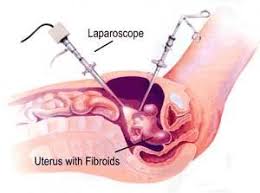
Laparoscopy, or keyhole surgery, uses a thin, lighted tube (laparoscope) inserted through small incisions in the abdomen to allow surgeons to see and perform procedures on the pelvic organs.
About Us
We are Ready to Help Improve Your Treatment.
Parnu Hospital, All right reserved.